Major victories against British government attempt to crush Palestine solidarity
UPDATE, 18 February 2026: All remaining Filton 24 defendants have been found NOT GUILTY of aggravated burglary, the most serious charge they faced. This comes two weeks after the first six were acquitted of the same charge by a jury.
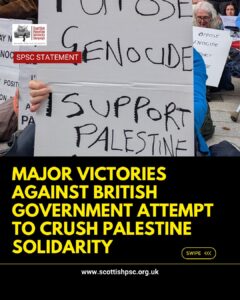
The High Court judgment on 13 February 2026 finding that the UK Government’s decision to proscribe Palestine Action under the Terrorism Act was unlawful and disproportionate is a victory for Huda Ammori and all activists and civil society organisations who have acted and campaigned against the Gaza genocide, the complicity of our institutions, and have opposed the government’s attempts to suppress solidarity with the Palestinian people.
This decision represents an important affirmation of fundamental democratic rights, including freedom of expression, freedom of assembly, and the right to protest.
The Court’s decision underscores what civil liberties organisations and campaigners have argued from the outset: that the extraordinary powers of terrorism legislation should not be misused to suppress political dissent or direct action aimed at exposing and disrupting Britain’s complicity in Israel’s system of occupation and apartheid. Criminal damage and public order offences are already covered by existing law. To stretch the definition of terrorism to encompass protest activity sets a deeply dangerous precedent.
While we note that the proscription technically remains in force pending appeal by Starmer’s government, the judgment is a rebuke to the Home Office’s overreach, and we should celebrate the win but not be complacent.
The Metropolitan Police Service issued a statement indicating that, although the proscription remains in place for now, officers will no longer make immediate arrests solely for expressions of support. However, surveillance of activists, repression of Palestine solidarity by the Met police - protesters being arrested for using the phrase “Globalise the Intifada”, aggressive policing at demonstrations - continues. Police Scotland has stated that arrests will continue, and they will “uphold the law” while the ban remains in place.
These positions reveal the untenable and confused legal landscape created by the Government ban. Thousands have already faced arrest or investigation for the simple act of holding placards or voicing solidarity. The suggestion that citizens may continue to be investigated, and in Scotland arrested, for peaceful expression, even after a court has ruled the ban unlawful, demonstrates how chilling and disproportionate this use of counter-terror powers has been.
Policing protests must be guided by proportionality and respect for human rights. The events of recent months have instead illustrated how this legislation can be weaponised to deter and intimidate political opposition to government participation in genocide and support for arms manufacturers.
We urge supporters to read the analyses of the High Court decision by Craig Murray and Tony Greenstein. Their analyses remind us who the judges are and caution that the Court’s reasoning is narrowly framed, giving the government ample grounds to win their appeal. Their intervention reminds us that this is not the end of the matter. The Government retains the capacity to seek reinstatement of the ban, and continued vigilance and pressure are required.
This case does not exist in isolation. It forms part of a broader pattern of escalating restrictions on protest and political dissent in Britain. From the expansion of public order powers to the aggressive policing of Palestine solidarity demonstrations, we are witnessing a contraction of civic space.
The attempt to brand a protest movement as “terrorist” because it targets the infrastructure of arms manufacture and supply should alarm all who value democratic freedoms. If such a precedent were to stand, it could be deployed against trade unionists, climate activists, or any campaign challenging state or corporate power. Our right to oppose injustice, including Britain’s material and political support for Israel’s genocide in Gaza and ethnic cleansing in occupied Palestine, must not be criminalised.
Be in no doubt - these victories have been won through defiance, actions and mobilisations across the country designed to challenge British government attempts to crush effective solidarity with the Palestinian people. While we celebrate these victories, the Scottish Palestine Solidarity Campaign:
- Reaffirms our commitment to defending the right to protest and political expression
- Welcomes the Court’s decision that the proscription decision was unlawful and disproportionate
- Calls on the Government to withdraw any appeal and to cease the misuse of terrorism legislation against political campaigners
- Stands in solidarity with all those who have faced arrest, investigation, or intimidation for expressing support for Palestinian rights
- Will remain defiant against all attempts to silence and intimidate us
This judgment is a reminder that democratic freedoms are hard-won and must be constantly defended. We will continue to campaign for justice, accountability, and an end to Britain’s complicity in violations of Palestinian human rights. To do that, we need YOU!
Leave a Reply